Purpose
(Source:Fox Sports)
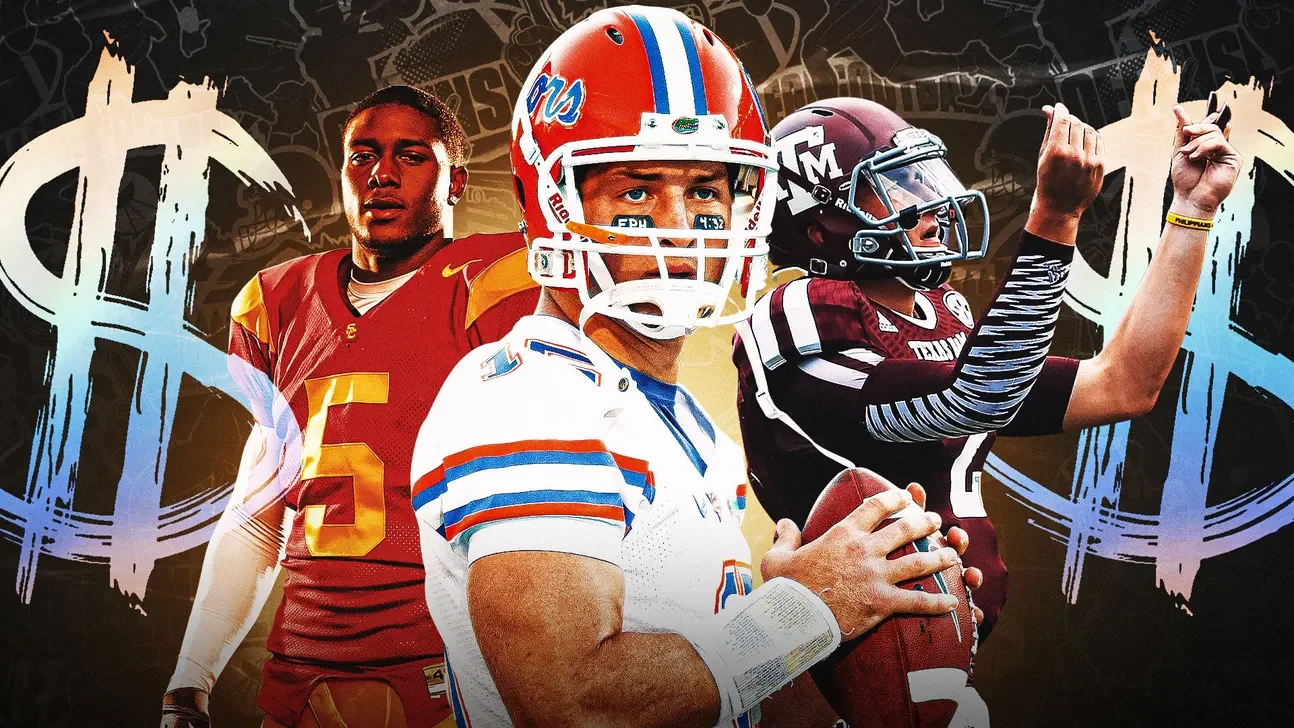
The world of College NIL is here and here to stay. So what does this mean for athletes, institutions that enroll these athletes, and the future of college sports as a whole? In this website is an overview of the world of College Name, Image, and Likeness (NIL). It combines academic research that shows the history of NIL, case studies of athletes who have been affected by NIL, and legal evolution showing the changes in the landscape from the past to today.
Through the combination of the analysis of recent developments, case studies, and academic research, this study dives into the challenges and opportunities that NIL in itself presents to college athletes. It highlights the economic impacts on the student athletes, and how the universities are affected by the often changes in the NIL landscape. It will challenge the broader social and ethical questions surrounding regulation and fairness of NIL.
Goals & Guiding Questions
Goals: People who engage in this website will have a deeper understanding of NIL and college sports as a whole. From its historical foundations to the complexities it has when dealing with NIL, this project aims to inform but also make viewers engage in critical thinking about the future of college sports. College athletics are beloved by millions across the country. Whether it's a chilly fall Saturday morning before an SEC rivalry matchup in football, or a heated matchup between two legends in Geno Auriemma and Dawn Staley in the women’s hoops, fans tune in to see young adults compete at the highest level. NIL has raised concerns for many about if the sport has maintained its integrity. This website will cover all of it.
Questions:
Are universities truly supporting athletes, or exploiting NIL for competitive advantage?
Should there be stricter national NIL regulations?
Where is the line between athlete empowerment and commercialization?
Methodology
Research Methods
1. Research Approach
This project uses a qualitative research approach to examine the evolution and impact of Name, Image, and Likeness (NIL) in college athletics. The study combines academic research, legal analysis, athlete case studies, and media coverage to explore how NIL has changed college sports socially, economically, and ethically.
2. Sources Used
Where the information came from:
Scholarly journals
Legal cases
NCAA history
News/media reports
Athlete examples
NIL valuation discussions
University/economic research
Research for this project was gathered from a variety of sources, including scholarly journal articles, NCAA and legal case documents, sports media coverage, economic studies, and athlete case examples. Academic sources were used to provide historical and analytical context, while current media coverage helped capture the rapidly changing nature of NIL in real time.
3. Case Study Method
Several athlete case studies were selected to demonstrate the different ways NIL affects college athletes. These examples include athletes who benefited financially and commercially from NIL, as well as cases that exposed legal disputes, transfer issues, and competitive imbalance. The case studies were chosen to represent a range of sports, genders, and institutional levels.
Athletes worth mentioning:
Caitlin Clark
Shedeur Sanders
Livvy Dunne
Darian Mensah
Yaxel Lendenborg
Paige Bueckers
4. Utilizing Comparative Analysis
Comparative analysis was also used throughout the project to evaluate disparities between different groups within college athletics. The study compares Power Four programs to mid-major schools, men’s sports to women’s sports, and athletic performance to social media marketability in order to better understand who benefits most from NIL opportunities.
Men’s vs women’s sports
Power Four vs mid-major schools
Performance vs personality branding
Pre-NIL vs post-NIL eras
Instructor Collaboration
Dr. Adam E Rugg is an Associate Professor at Farfield University in the John Charles Meditz College of Arts & Sciences, specifically in the communications department. He teaches classes on sports media and the industry culture, as well as capstone research projects in Communication. Professor Rugg has numerous publications with research on the NFL, media campaigns, culture, activism, and social justice.

Photo of Dr. Adam E. Rugg. Source: Olympic Analysis Project